
Sleep on the road
How to get a toddler to sleep in a hotel room
To get a toddler to sleep in a hotel room, start with a safe sleep surface, then keep the routine and the room as close to home as you can. This guide gives the sourced safety facts first and our own routine suggestions second, and it marks which is which.
Important: the AAP safe sleep recommendations in this guide are written for babies up to 1 year old. We did not find AAP, NIH or NHS sleep guidance written for toddlers, so where we apply the AAP advice to a toddler it is our extrapolation, not the AAP's. Last checked 21 October 2026. This is not medical advice. Ask your pediatrician about your child.
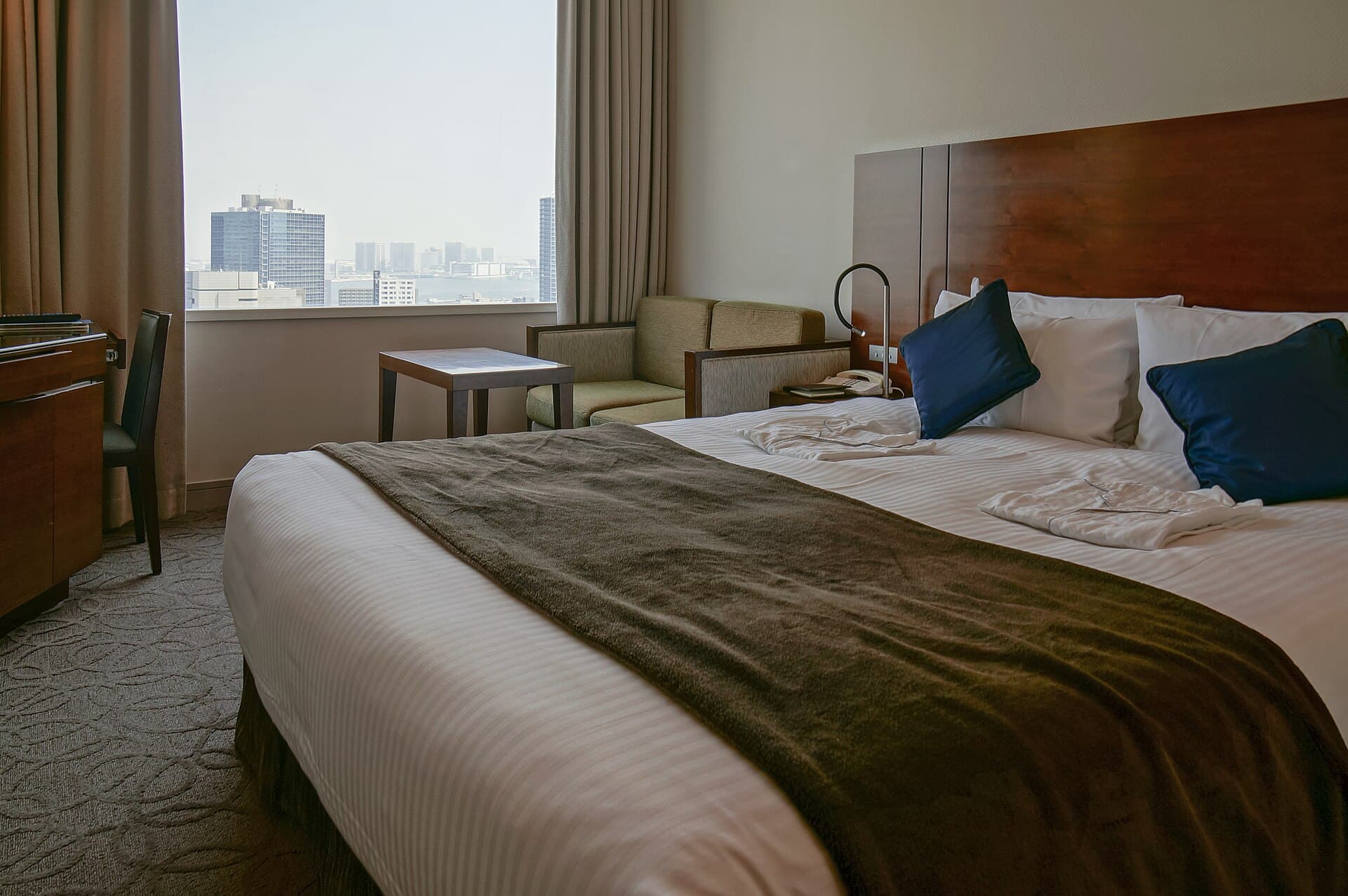
The safe sleep surface (AAP guidance for babies under 1)
The AAP says to use a firm, flat sleep surface that does not indent, and that any surface inclined more than 10 degrees is unsafe for sleep. It says to keep soft bedding out and use only a fitted sheet, with no blankets, pillows, bumpers or stuffed toys, because they raise the risk of entrapment, suffocation and strangulation.
The AAP also says that if a baby falls asleep in a car seat, stroller or carrier, you should move them to a firm sleep surface. These statements are written for babies under 1. A toddler is past that age, so treat them as a careful starting point, and ask your pediatrician what suits your child.
Crib or play yard: what the rules say
The AAP says a portable crib or play yard is fine if it meets federal safety standards, and otherwise says not to use it. The CPSC says play yards have their own mandatory rule, 16 CFR part 1221, which incorporates ASTM F406. Products made or imported on or after April 5, 2025 must meet ASTM F406-24 with modification.
For hotels, the CPSC says hotels and motels had to use compliant cribs by December 28, 2012, and that drop-side and noncompliant cribs are banned. The crib standards cover portable cribs but not play yards. We did not find an official source that requires hotels to supply a compliant play yard, so ask the hotel what it provides and look at it when you arrive.

When a toddler outgrows the play yard
The CPSC says a play yard is for children under 35 inches tall who cannot climb out. That is a handy cue. If your child is taller, or climbing out, ask the hotel for a bed or a crib instead of a play yard, and decide before the trip where they will sleep.
Time zones and jet lag
The CDC says time zone changes and schedule disruption can disturb children's sleep. Its general jet lag guidance is not child-specific, because the page has no child advice. It says to shift your sleep 1 hour per day toward the destination for the last 2 to 3 days before you leave, and that adaptation averages about 1.5 hours a day travelling west and 1 hour a day travelling east. Treat that as general guidance and use the kids jet lag calculator to turn it into a bedtime plan.
Cribs and sleep spaces abroad
The CDC says cribs in some locations might not meet US safety standards, so plan a safe sleep space for international trips. Ask the hotel before you book what it will provide, and decide whether to bring a travel crib that meets the standards of your home country.
Routine suggestions for the room
These are our suggestions, not sourced facts.
- Keep the bedtime routine the same. Same order, same story, same song. The room changes, the routine does not.
- Set up the sleep space first. Build the crib or bed before dinner so the child sees it and the room does not feel new at bedtime.
- Make the room dark. Hotel curtains let in light, so check before bedtime and close any gaps.
- Bring one comfort item from home. If your child uses a toy, check it against your pediatrician's advice for their age.
- Plan the adults' evening. Decide where you will sit once the child is asleep, since the room is also the living room.
A checklist for the day you arrive
- Look at the sleep space. Check that it is stable, with no gaps and no soft bedding.
- Ask what it is. A crib, a portable crib or a play yard, and who made it.
- Check the height. Does your child fit the play yard, or should you ask for a bed?
- Move the furniture. Keep the sleep space away from curtain cords and anything the child can climb.
- Run the routine. Start at the normal time at home, adjusted for the time zone.
Put the lodging and sleep details in one place with the family vacation itinerary template. Ula, your AI travel companion, plans and books trips with your OK and remembers how you travel. It is in early access, and you can join the waitlist.
Sources
- AAP HealthyChildren.org, a parent's guide to safe sleep (written for babies under 1): healthychildren.org, sourced 21 October 2026
- CPSC, play yards business guidance: cpsc.gov, sourced 21 October 2026
- CPSC, the new crib standard, questions and answers: onsafety.cpsc.gov, sourced 21 October 2026
- CDC Yellow Book, traveling safely with infants and children: cdc.gov, sourced 21 October 2026
- CDC Yellow Book, jet lag disorder: cdc.gov, sourced 21 October 2026
Questions
Do the AAP safe sleep rules apply to toddlers?
The AAP recommendations in this guide are written for babies up to 1 year old. We found no AAP guidance written for toddlers, so applying them to a toddler is an extrapolation. Ask your pediatrician.
Are hotel cribs safe?
The CPSC says hotels and motels had to use compliant cribs by December 28, 2012, and that drop-side and noncompliant cribs are banned. Check the crib when you arrive, and ask the hotel what it is.
Do hotels have to provide play yards?
We did not find an official source that requires hotels to supply a compliant play yard. The CPSC crib rules cover portable cribs but not play yards, so ask the hotel what it provides.
When is a toddler too big for a play yard?
The CPSC says a play yard is for children under 35 inches tall who cannot climb out. If your child is taller or climbing out, ask for a bed or a crib.
How do I help a toddler with jet lag?
The CDC says time zone changes can disturb children's sleep. Its general guidance, not child-specific, is to shift sleep 1 hour per day toward the destination for the last 2 to 3 days before you leave.